Imagine being raised to believe in God and Satan, Heaven and Hell, and choosing to allow your baser nature to govern your actions. You’re mean, selfish, abusive to your wife, children, and animals. But you believe it’ll all be okay because you’ll confess or repent on your deathbed.
But then you develop dementia and can’t comprehend that your end is near and it’s time to repent or make that confession.
Think about that.
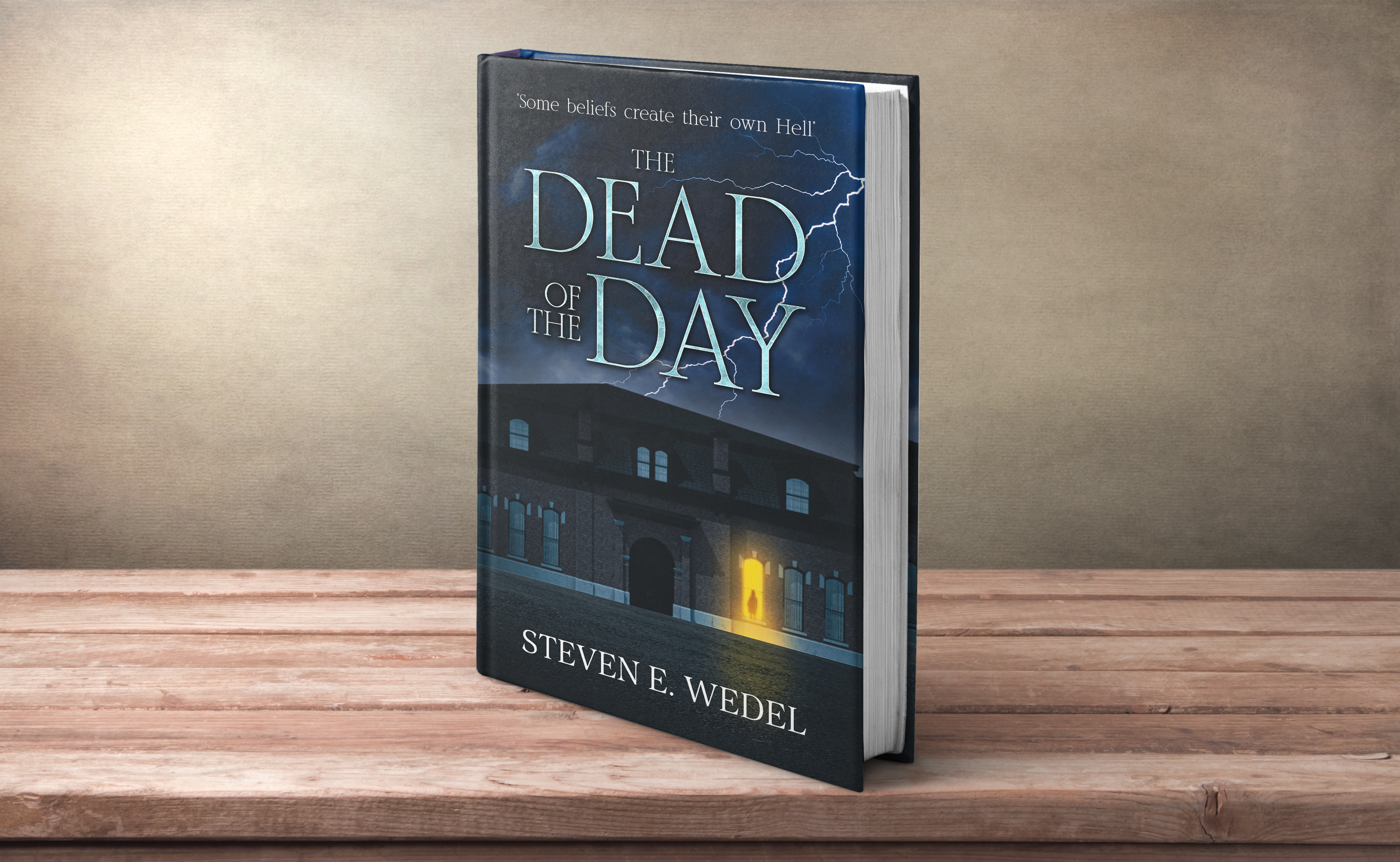
This is the first of 13 posts I’m making to promote my new psychological horror novella, The Dead of the Day. Thanks for joining me.
What if your salvation—your eternity—hinges on one last act of recognition. One moment of clarity, humility, and repentance. One final conversation with God.
But you can’t remember what you did, what to say, or who it is you’re supposed to talk to.
That’s a thought that lodged itself in my head and wouldn’t let go. I started thinking about the people we see slipping into dementia. Alzheimer’s. Memory loss. People who wander away from themselves long before they’re physically gone. People whose sense of right and wrong might erode until they’re just… blank.
So what happens to their souls?
If someone lived a life full of cruelty, rage, or prejudice—if they truly believed they’d find forgiveness in their final breath—but then forgot who they were before they could confess … Do they still get saved?
Or are they trapped in a decaying body with a decaying soul, doomed to wait for a punishment they no longer understand?
Or is the concept of reward and punishment after death just a fairy tale?
These questions became the seeds of my new novella, The Dead of the Day.
In the story, an old man named Enoch Hoffmann wakes up in a nursing home during a storm. But Enoch thinks he’s still in his farmhouse and that his dairy cattle are in danger of drowning in the rising river. In his frenzy to get outside and save them, someone dies.
Enoch has no memory of how he came to be in the nursing home, no memory of what he did, no family willing to claim him, and a mind that’s slipping deeper and deeper into something … dangerous. His time is running out. Things most of us can’t see have told Enoch and other residents of the home that Enoch’s time is short. Everyone is terrified of the evil gathering around him.
The Dead of the Day blends psychological horror, religious dread, and generational guilt. At its core, it wrestles with a simple, terrifying question:
What if the devil isn’t coming for you — he’s already in the room, and you’ve forgotten why?
I’ve always believed horror should challenge us. It should force us to look into the shadows we don’t want to name — whether they’re in the forest, our family tree, or our own heads. And sometimes, the scariest monsters are the ones waiting patiently in a bed, calling you by a name you didn’t know they remembered.
If this kind of slow-burn, soul-deep horror interests you, I hope you’ll check out The Dead of the Day.
It’s available now for pre-order at Amazon. I’d love to hear what you think.
Question for you:
Have you ever known someone who changed as their memory faded? Did they hold onto their sense of self—or did something else start to come through?
Let me know in the comments.
And come back next week when I’ll talk about the thin wall between life and death in nursing homes.
(If you’re interested in listening to a talking haystack, you can visit my YouTube channel and watch me stumble my way through a reading of this post. Click here.)

 Steven E. Wedel
Leave a comment